


 Language: English












Solutions
Horse Construction offers full range of structural strengthening materials with technical supports, documentation supports, products supports, project supports.
What Can Externally Bonded FRP Strengthen? A Full Guide to Structural Applications

Externally bonded carbon fiber strengthening is no longer a niche technique. According to ACI 440, externally bonded carbon fiber systems have been applied to thousands of structures worldwide — and the range of applications is far broader than most contractors initially expect, beams, slabs and columns are only the beginning.
Concrete Frame Elements: The Core Applications
These are the most common use cases, accounting for the majority of FRP strengthening work in buildings and infrastructure.
Beams
The classic application. Unidirectional carbon fabric bonded to the tension face restores or increases flexural capacity, while U-wraps or side bonding along the web provide shear strengthening. Typical triggers: change of use, higher live loads, design or construction errors, and section loss from corrosion or demolition.
Slabs
Carbon fabric or prefabricated CFRP laminates (plates) bonded to the soffit increase flexural capacity for heavier floor loads — common in office-to-retail conversions, equipment additions, and slab openings for new stairwells or MEP shafts. Around openings, fabric strips re-establish the interrupted load path.
Columns
Circumferential wrapping with carbon fabric provides passive confinement to the concrete core, improving axial capacity, ductility and lap-splice performance — a standard seismic retrofit measure for columns with inadequate transverse reinforcement. The section dimensions remain virtually unchanged.
Walls
Both shear walls and masonry infill walls benefit from FRP. Vertical and horizontal fabric strips increase in-plane shear and flexural capacity; on boundary elements, wrapping restores confinement. Typical scenarios include seismic upgrades and new wall openings.
Joints and Connections
Beam-column joints are often the weakest link in older frames. FRP wrapping and anchorage details improve joint shear capacity and confinement, addressing brittle joint failure modes identified in seismic assessments.
Large-Span and Special Structures
ACI 440 explicitly lists a second tier of applications that many engineers overlook — structures where FRP's light weight and formability deliver advantages no conventional method can match. These structures differ fundamentally in how they carry load, so they are best understood in six groups, each with its own strengthening logic:
Tall Vertical Structures — Chimneys and Smokestacks
Typical deficiencies. Industrial stacks and chimneys crack under wind-induced tension, thermal gradients from flue gases, and long-term material aging. Once vertical and horizontal cracks open, the section loses both strength and durability, and the damage accelerates at height where inspection is hardest.
How FRP is applied. Circumferential carbon wrapping resists hoop stresses and closes horizontal cracks, while vertical fabric strips restore flexural capacity against wind bending. Strips and wraps are combined to follow the actual crack pattern and stress field of the stack.
Why FRP wins here. Any added mass at the top of a tall stack increases seismic demand — concrete jackets and steel bands work against the structure they are trying to save. FRP adds almost no weight, needs no heavy lifting equipment, and conforms perfectly to the curved shell. Installation proceeds from suspended platforms with minimal downtime.
Curved Shell Structures — Vaults and Domes
Typical deficiencies. Masonry and concrete vaults and domes crack when the thrust line moves outside the section — caused by support settlement, added roof loads, or material degradation. Historic shells are particularly vulnerable because their safety depends entirely on geo
metry that must not be altered.
How FRP is applied. Carbon fabric is bonded along the intrados or extrados, following the principal tension trajectories, to control crack widths and restore the membrane action of the shell. On heritage structures, localized strips are preferred over full coverage to keep the intervention minimal.
Why FRP wins here. The treatment does not change the geometry — the very thing that keeps a shell stable — and adds no mass that could shift the thrust line further. Compared with shotcrete or masonry overlays, FRP is visually minimal after finishing and far more reversible, which matters on listed and historic structures.
Underground Structures — Tunnels
Typical deficiencies. Tunnel linings deteriorate under redistributed ground pressure from adjacent excavation, water ingress with reinforcement corrosion, and long-term concrete degradation. Rail and road tunnels add another constraint: intervention windows measured in hours, not days.
How FRP is applied. Fabric strips and patches strengthen the crown and sidewalls exactly where cracking and section loss occur. Because the system is only a few millimeters thick, the clearance envelope — often the hardest constraint in a tunnel — is fully preserved.
Why FRP wins here. Conventional lining repairs with sprayed concrete consume precious clearance and require long closures. FRP installs fast, cures without formwork, and allows traffic or rail services to resume on tight possession schedules. Every millimeter of preserved section matters.
Storage Structures — Silos
Typical deficiencies. Grain, cement and mineral silos work under constant cyclic loading: every filling and discharge cycle loads the wall in hoop tension. Over years this produces vertical cracking, aggravated by wall abrasion and, in welded or slip-formed shells, by construction weaknesses.
How FRP is applied. External circumferential carbon wrapping restores hoop capacity and stitches vertical cracks closed. Wrapping bands are positioned by crack mapping and structural analysis, concentrating material where the hoop demand is highest.
Why FRP wins here. The work is done entirely from outside, so in many cases the silo does not need to be emptied and production stoppages stay short. Steel banding — the traditional alternative — is heavier, slower to tension, and introduces corrosion maintenance that FRP simply does not have.
Pressure Pipes and Pipelines
Typical deficiencies. Large-diameter concrete and steel pipelines lose capacity through internal pressure cycles, corrosion of prestressing wires or steel walls, and external loads from traffic, soil movement or poor bedding. Replacement means excavation, long outages and high cost.
How FRP is applied. Circumferential wrapping restores pressure (hoop) capacity; longitudinal layers carry bending and thrust forces. Depending on access, the system is applied externally on exposed sections or internally on large-bore pipes, often as part of a trenchless rehabilitation program.
Why FRP wins here. FRP rehabilitation has become a mainstream alternative to pipe replacement in water, sewage and industrial networks precisely because it avoids digging, shortens outages, and extends service life at a fraction of replacement cost.
Trussed Structures — Bridge, Roof and Industrial Trusses
Typical deficiencies. Truss members in bridges, industrial halls and long-span roofs suffer from under-designed tension chords, fatigue damage at connections, section loss from corrosion, and load increases when buildings change use or cranes are upgraded.
How FRP is applied. Unidirectional fabric or prefabricated laminates are bonded along tension chords and diagonals; connections receive localized wrapping to improve confinement and fatigue performance. Compression members can also be addressed with proper wrapping and detailing to restrain buckling.
Why FRP wins here. Trusses are exactly the geometry that defeats conventional methods: multiple member orientations, gusset plates, limited access. Fabric conforms to any member shape, adds no noticeable weight to long spans, and requires no welding or bolting near fatigue-sensitive connections.
Beyond Concrete: Masonry, Timber, Steel and Cast Iron
Externally bonded FRP systems are not limited to reinforced concrete. The same guide recognizes their use on other structural materials — an area of growing importance for heritage and adaptive-reuse projects.
Masonry
Unreinforced masonry walls and arches gain out-of-plane and in-plane capacity from surface-bonded FRP strips. The intervention is reversible-friendly, visually minimal after finishing, and far lighter than shotcrete overlays — essential for listed buildings and seismic strengthening of historic masonry.
Timber
Beams and joists in old timber floors are strengthened by bonding carbon fabric or laminates to the tension face. The added capacity allows higher floor loads in conversions, while the intervention remains hidden above ceilings.
Steel
CFRP bonding on steel members increases elastic stiffness and can extend fatigue life by reducing stress ranges at critical details. Applications include bridge girders, crane beams and offshore structures, provided surface preparation and adhesive selection account for the steel substrate.
Cast Iron
Historic cast-iron columns and beams — common in 19th-century industrial buildings — are brittle and difficult to weld or bolt. Adhesively bonded FRP offers a non-invasive strengthening route that respects the material's limitations.
A Manufacturer's Note
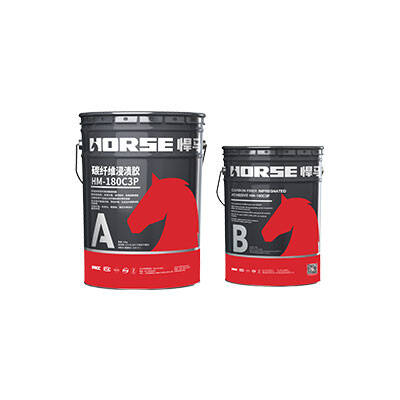
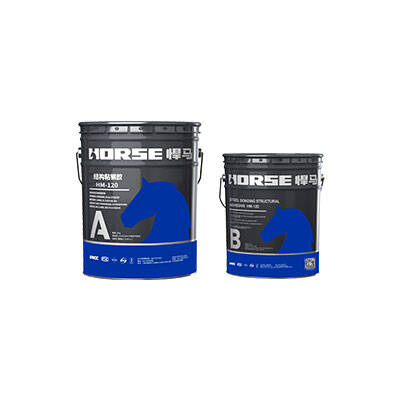
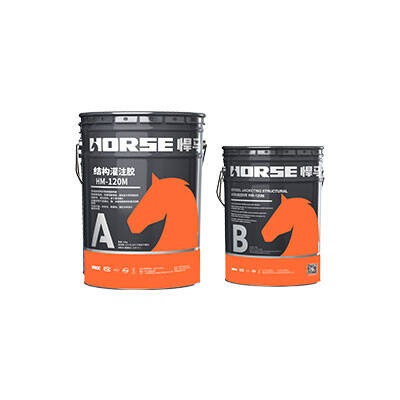
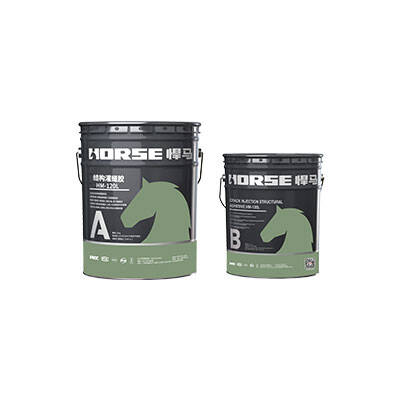
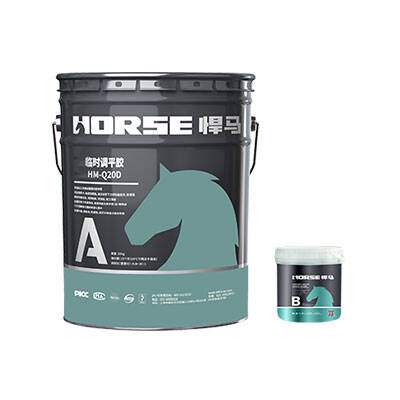
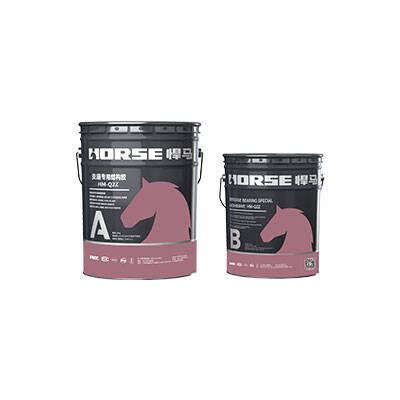
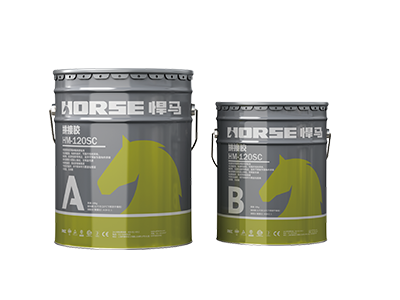
The effectiveness of any externally bonded FRP system depends on the quality of its two components: the fiber and the structural adhesive that bonds and impregnates it. At Horse Construction, we manufacture both in-house — unidirectional carbon fabrics in multiple weights, prefabricated CFRP laminates, and matched impregnation, bonding and repair adhesives — so the system arrives on site as one tested, compatible package.
Whether your project involves a cracked silo, a seismic column retrofit, or a cast-iron beam in a heritage conversion, our technical team can support material selection and specification.
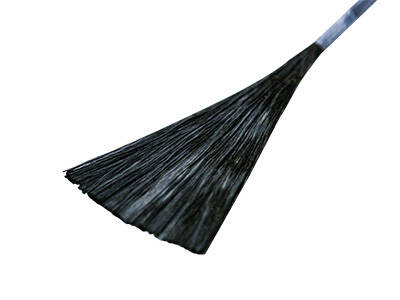
Products covered in this guide: Unidirectional Carbon Fiber Fabric · CFRP Laminates · Impregnating & Bonding Adhesives · Repair Mortars
Horse Construction — structural strengthening materials manufacturer, serving owners, applicators, consultants, contractors and engineers in 100+ countries.
You can find anything here you are in need of, have a trust trying on these products, you will find the big difference after that.

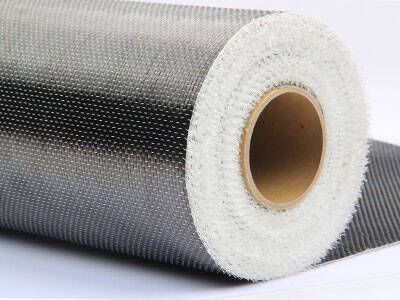
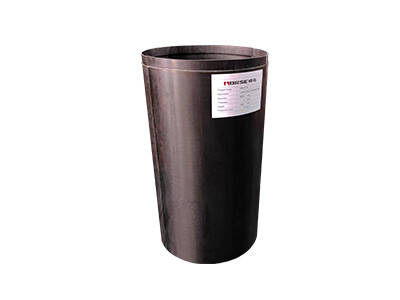
High strength, unidirectional carbon fiber wrap pre-saturated to form a carbon fiber reinforced polymer (CFRP) wrap used to strengthen structural concrete elements.

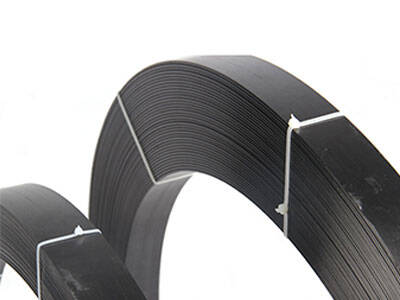
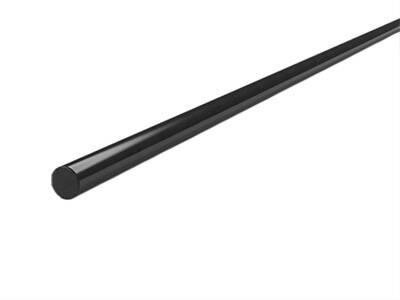
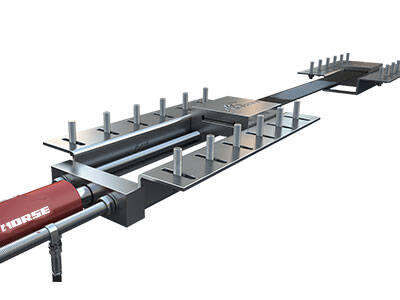
High strength carbon fiber reinforced polymer (CFRP) strip / laminate / plate for structural strengthening and concrete repair

High strength, unidirectional carbon fiber fabric pre-saturated to form a carbon fiber reinforced polymer (CFRP) fabric used to strengthen structural concrete elements.
