Language: English











Shear Reinforcement Of Prestressed Overpasses
Carbon Fiber
In this prestressed overpass project in Spain, a carbon fiber shear reinforcement scheme was adopted to address the insufficient shear capacity of the box girder webthus completing the structural strengthening without significantly increasing the self-weight and minimizing traffic impact.

Project Overview
This overpass project is located in Spain. The bridge carries local traffic over a multi-lane highway and consists of single-cell prestressed concrete box girders supported on reinforced concrete piers.
After years of service, structural assessment identified shear capacity deficiencies in the girder webs — particularly in the end zones near supports where shear demands are highest. The assessment was conducted per ACI 440.2R-17 guidelines for externally bonded FRP reinforcement.
Structural Defect Analysis
Shear cracks appeared in the concrete web of the box girder, mainly caused by repeated live loads, prestress loss, and concrete creep, resulting in insufficient shear reserve of the component.
Localized weathering and carbonation were observed on the concrete surface, leading to a decrease in surface strength.
The bridge is situated beneath a highway, prohibiting prolonged traffic closures; therefore, the reinforcement scheme must meet the requirements of low self-weight, limited construction space, and minimal traffic disruption.
Environmental Conditions: The bridge is located in an open-air environment, requiring reinforcement materials with excellent weather resistance to withstand temperature cycles, ultraviolet radiation, and alternating wet and dry conditions.


Solution
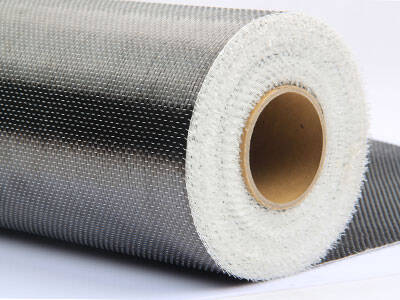
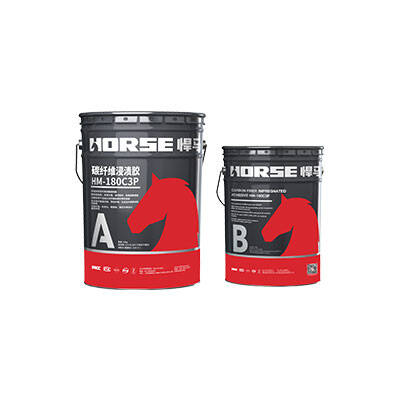
A vertical carbon fiber fabric + U-shaped stirrup shear reinforcement system is adopted. High modulus carbon fiber cloth is bonded to both sides of the web of the box girder to bear part of the shear force, share the shear stress of the original concrete and stirrups, improve the shear bearing capacity of the web, and at the same time restrain existing cracks and inhibit further crack propagation.

Why CFRP for Bridge Shear Strengthening?
1. Minimal added dead load
CFRP fabric adds negligible weight to the structure — typically less than 1% of the member's self-weight. This is critical for bridge structures where increasing dead load would reduce the live load capacity margin and could trigger substructure or foundation reassessment.
2. Corrosion resistance
Unlike steel plate bonding or external steel jacketing, CFRP does not corrode. For bridges exposed to de-icing salts or coastal environments, this is a major durability advantage and reduces long-term maintenance requirements.

3. Speed of installation with minimal traffic disruption
CFRP wet lay-up is a lightweight, hand-applied process that does not require heavy lifting equipment. Installation can proceed in stages with partial lane closures, minimizing impact on highway traffic below — an important consideration for overpass structures.
4. Conformability to complex geometry
Box girder interiors, corner transitions, and varying web thicknesses can all be accommodated by CFRP fabric, which conforms to irregular surfaces better than rigid steel plates.
5. Accessibility in confined spaces
For box girders with limited interior headroom and narrow access openings, CFRP fabric sheets can be transported and installed far more easily than heavy steel sections.